
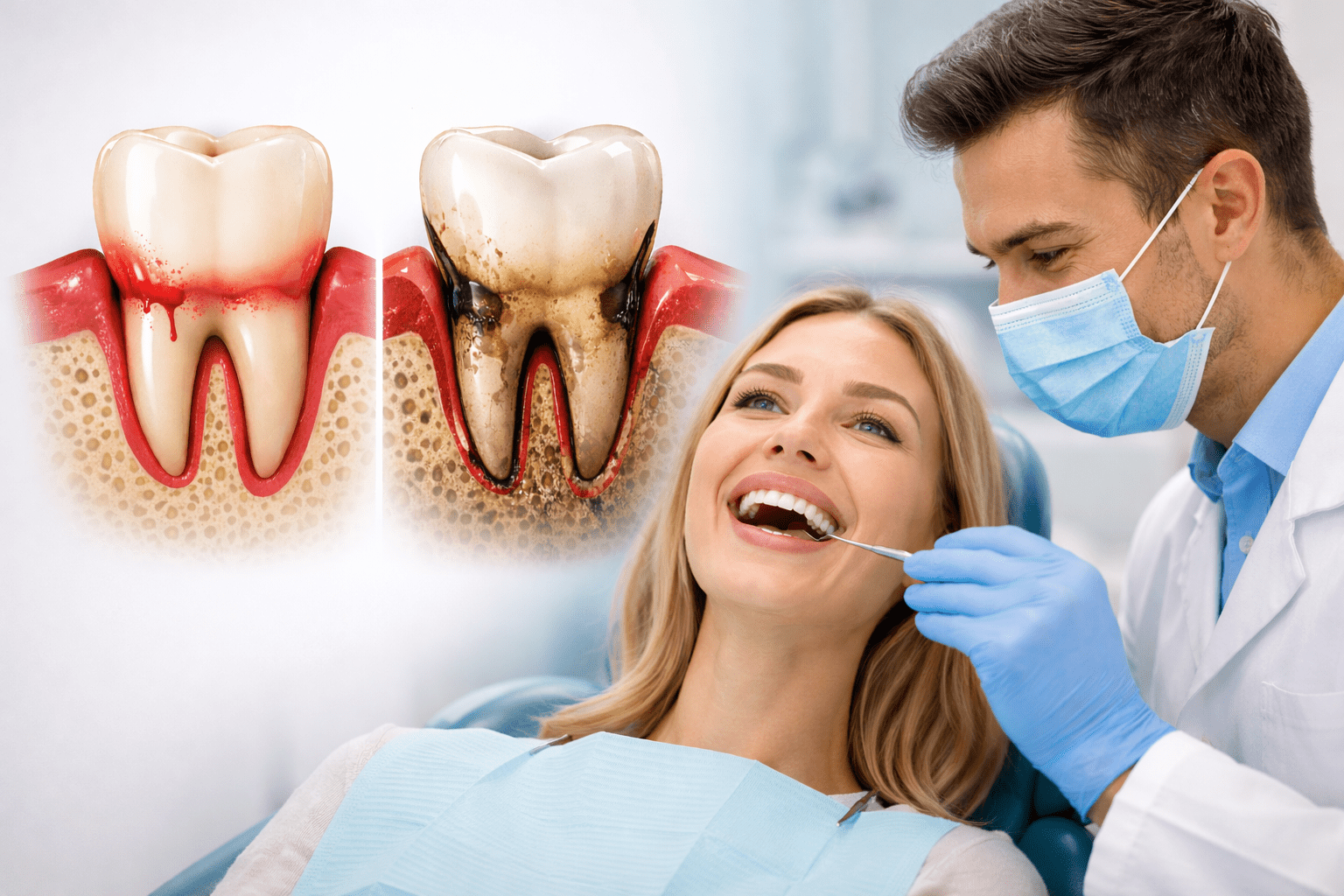
Bleeding gums when brushing, persistent bad breath, or red, tender gums are common signs of inflammation. Most often, this is gingivitis—an early and reversible stage. But when inflammation spreads below the gumline and affects the structures that support the teeth, it becomes periodontitis, which requires prompt care.
Here’s how to tell the difference, when a deep dental cleaning may be necessary, and a simple prevention routine—especially if you’re looking for care for periodontitis in Montreal.
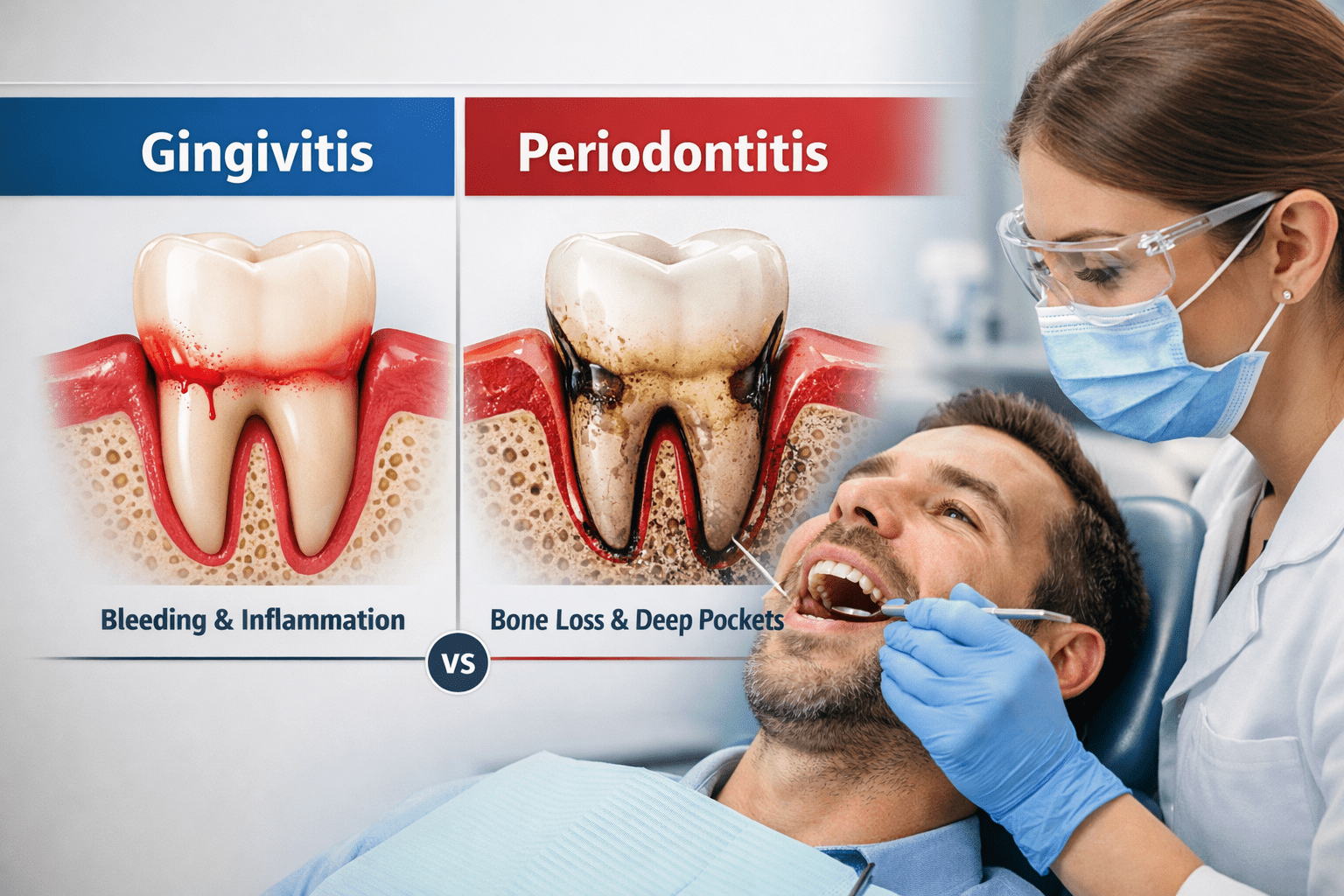
Gingivitis vs Periodontitis: The Clear Difference
- Gingivitis: Gum inflammation caused mainly by plaque buildup. Bleeding, redness, swelling. No bone loss. Usually reversible.
- Periodontitis: Inflammation plus infection affecting the supporting tissues. Gum pockets, possible bone loss, and tooth loosening. The goal is to stabilize the condition.
For more details, see our Periodontitis page (internal link).
Symptoms: What Stage Are You At?
Common signs of gingivitis
- Bleeding during brushing or flossing
- Red, sensitive, sometimes swollen gums
- Mild bad breath
Signs more consistent with periodontitis
- Bleeding that persists despite improved oral hygiene
- Strong or persistent bad breath / unpleasant taste
- Gum recession (teeth look longer)
- Changes in spacing between teeth, food getting trapped
- Loose teeth or changes in your bite
Do not ignore: pain when chewing, pus around the gums, or mobile teeth. In these cases, book a prompt dental exam (internal link: Dental Exam).
Why Periodontitis Is More Serious
Gingivitis is usually easy to reverse. Periodontitis, however, can lead to progressive bone loss and, over time, tooth loss. Research also shows associations between periodontal disease and conditions like diabetes (without always being a direct cause). Bottom line: earlier intervention is simpler and more effective.
Simple Self-Checks (2 Minutes)
These don’t replace professional care, but try them once a week:
- Look at your gumline: Bright red, swollen, or easily bleeding?
- Floss test: Bleeding repeatedly in the same area is a warning sign.
- Recession check: Compare gum height in photos taken weeks apart.
- Mobility: A tooth that feels loose or pressure discomfort isn’t normal.
If you notice multiple signs (especially bleeding plus recession), schedule a dental exam. Measuring gum pockets (periodontal probing) provides clarity.
Treatments: From Routine Cleaning to Deep Cleaning
If it’s gingivitis
Treatment is usually straightforward:
- Dental cleaning (scaling) to remove plaque and tartar
- Oral hygiene adjustments (gentle brushing at the gumline + interdental cleaning)
- Reassessment if needed
At this stage, a professional dental cleaning and a consistent routine often make a big difference (internal link: Dental Cleaning).
If it’s periodontitis
The goal is to reduce inflammation, decrease pocket depth, and prevent progression. Depending on severity, treatment may include:
- Scaling and root planing (deep cleaning): removes tartar and bacteria below the gumline and smooths root surfaces to promote healing
- Local anesthesia if needed
- Closer maintenance follow-ups
When is deep cleaning needed?
It’s not based on guesswork. Dentists consider:
- Pocket depth measurements
- Bleeding during probing
- Subgingival tartar
- X-rays to assess bone support, when indicated
If you’re searching for “periodontitis Montreal,” the condition may already be advanced—an individualized plan can truly change the outcome.
A Realistic (and Effective) Prevention Routine
Daily
- Brush twice a day for 2 minutes with a soft-bristled (or electric) toothbrush
- Focus on the gumline: 45° angle, gentle motions—don’t scrub
- Clean between teeth once daily: floss or interdental brushes depending on spacing
- Brush your tongue (helps with breath)
Watch out for
- Smoking/vaping: increases risk and can mask bleeding
- Dry mouth: stay hydrated and tell your dental team about medications
- Clenching/grinding: can worsen discomfort—mention it during your exam
In the clinic
- Dental cleanings at the recommended frequency (often every 6 months; sometimes more often for higher risk)
- Regular dental exams to catch issues early and fine-tune your routine
FAQ
Is it normal to bleed when I start flossing again?
Mild bleeding can happen initially if gums are inflamed. If it lasts more than a week, get it checked.
Can periodontitis be cured?
The focus is usually on stabilization: reducing inflammation, controlling pockets, and maintaining results with home care and professional maintenance.
Can it come back after treatment?
Yes, if plaque and tartar return. Consistency at home and regular maintenance visits are key.
In Summary
Gingivitis is often the first warning—and it’s very treatable. Periodontitis requires more precise care, sometimes including deep cleaning. If you suspect periodontitis, the best first step is a dental exam for a clear diagnosis and a personalized plan.
Note: This content is for informational purposes only and does not replace a professional diagnosis.

