

Taking care of your teeth is not limited to your cleaning appointment. Between dental visits, the small habits you repeat every day make the biggest difference: brushing with fluoride toothpaste, cleaning between your teeth, limiting sugars, and watching for changes.
At Dentisterie Manoukian, your dentist in Montreal, we often see that a simple, consistent routine can help prevent cavities, tartar buildup, bad breath, and gum irritation. Here is a practical guide to keeping your mouth healthy at home between visits to the clinic.
|
Key takeaways · Brush your teeth for about 2 minutes, at least twice a day, with a soft-bristled toothbrush and fluoride toothpaste. · Floss or clean between your teeth once a day. · Spit out excess toothpaste and avoid rinsing vigorously right after brushing, unless advised otherwise. · Drink water, reduce how often you have sugary foods and drinks, and book an appointment if you have pain, bleeding, or persistent bad breath. |
Why is at-home dental care so important?
A professional cleaning is essential, but it does not replace your daily routine. Dental plaque forms again every day. If it is not removed regularly with brushing and flossing, it can harden into tartar, irritate the gums, and increase the risk of cavities.
The good news: you do not need a complicated routine. Effective oral hygiene is built on three basics: brushing well, cleaning between your teeth, and choosing eating habits that support the health of your teeth and gums.
1. Brush your teeth properly, not just quickly
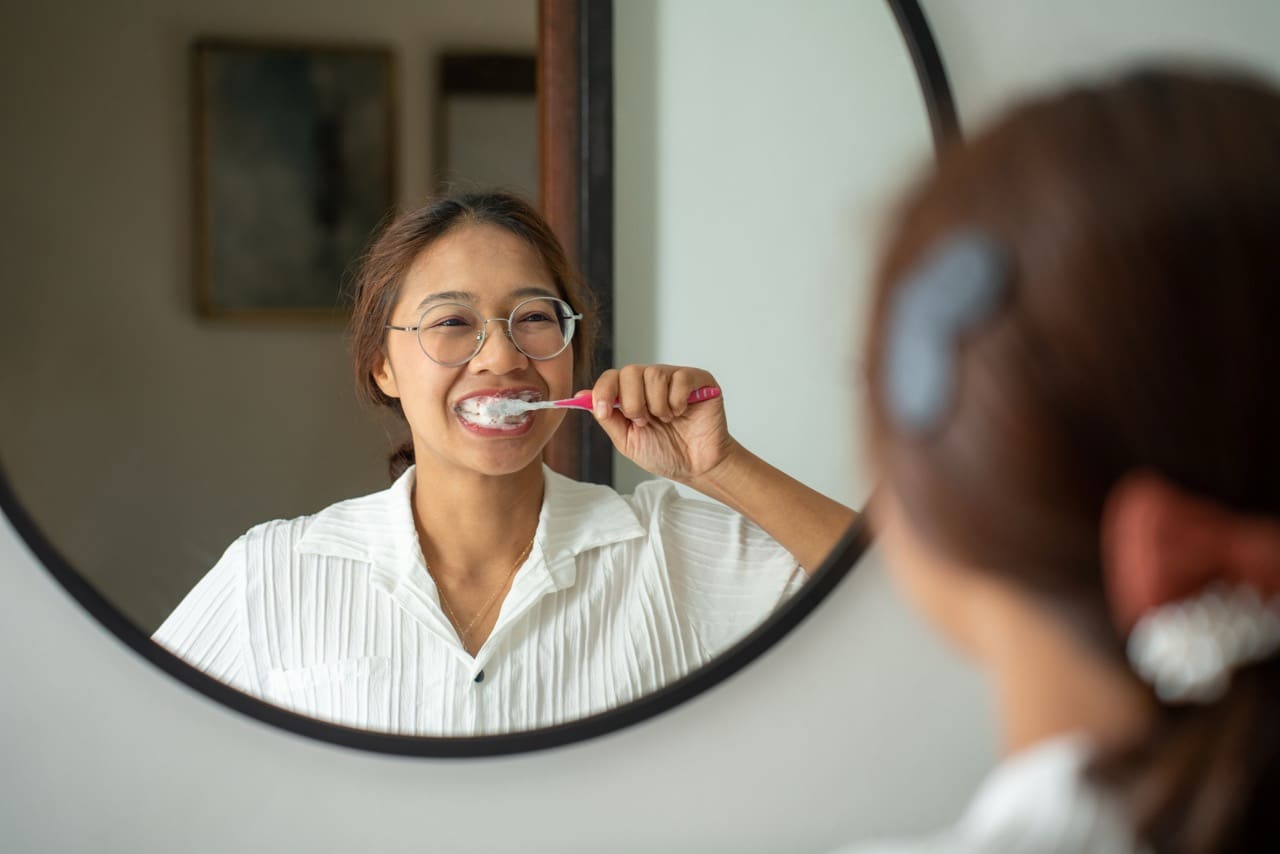
Brushing is the most familiar habit, but it is often done too quickly or too forcefully. For a better clean without irritating your gums, choose a soft-bristled toothbrush and fluoride toothpaste.
The right brushing technique
- Place the brush at about a 45-degree angle toward the gumline.
- Use small, gentle movements instead of scrubbing aggressively.
- Clean all surfaces: outer, inner, and chewing surfaces.
- Gently brush your tongue to help reduce the bacteria that cause bad breath.
- Replace your toothbrush or brush head when it is worn, often around every 3 to 4 months.
Brushing too hard can contribute to enamel wear and gum recession. If your gums are sensitive or you can see the roots of your teeth, ask for advice at your next dental exam.
2. Clean between your teeth every day
Even the best toothbrush cannot reach every area between the teeth. That is why dental floss, interdental brushes, or certain water flossers can be helpful depending on your mouth, restorations, and dexterity.
To floss, gently slide the floss between two teeth, curve it into a C shape around the tooth, and move it up and down without snapping the floss against the gum. Use a clean section for each space.
If the floss shreds, gets stuck, or your gums bleed for several days despite a gentle technique, book an appointment. It may indicate tartar, gum inflammation, a restoration that needs adjustment, or another issue that should be checked.
3. Use fluoride to your advantage
Fluoride helps strengthen enamel and protect teeth from the acid attacks that contribute to cavities. For most adults, the simplest step is to use a fluoride toothpaste twice a day.
After brushing, spit out the excess toothpaste. Avoid rinsing your mouth thoroughly with water immediately afterward so the fluoride can work longer. If you are at higher risk of cavities, your dentist may also recommend a fluoride mouthwash or an in-clinic fluoride treatment.
4. Mouthwash: helpful, but not magic
Mouthwash can complement your routine, especially when it is chosen based on your needs: breath, sensitivity, cavities, gum inflammation, or dry mouth. However, it does not replace brushing or cleaning between your teeth.
If you use a therapeutic mouthwash, follow the product directions or your dentist’s recommendations. Some mouthwashes are better suited for temporary use, while others can be part of a daily routine.
5. Adjust your diet to protect your teeth
Cavities are not only about how much sugar you consume, but also how often your teeth are exposed to it. Sugary drinks, juices, sticky candies, and repeated snacks keep the mouth acidic for longer.
- Choose water as your main drink, especially between meals.
- Keep sweet foods for mealtimes instead of snacking on them throughout the day.
- Add tooth-friendly foods: cheese, plain yogurt, nuts, crunchy vegetables, and less acidic fruits.
- After a sugary snack, rinse your mouth with water if you cannot brush your teeth.
Acidic drinks, even sugar-free ones, can also contribute to enamel erosion. If you drink them, avoid sipping them over a long period.
6. Protect your teeth from cracks, wear, and injuries
Taking care of your teeth also means avoiding habits that damage them. Chewing ice, opening packaging with your teeth, biting your nails, or clenching your jaw can cause cracks, wear, or muscle pain.
If you play a contact sport, a mouthguard can help prevent injuries. If you grind or clench your teeth at night, talk to your dentist about a night guard. It can help protect teeth from wear related to bruxism.
7. Watch for signs that deserve an appointment
Do not wait until pain becomes severe before consulting. The earlier a problem is detected, the simpler and more conservative treatment can often be.
Book an appointment if you notice:
- gum bleeding that persists;
- bad breath that does not go away despite good hygiene;
- pain, sensitivity to hot or cold, or pain when chewing;
- a cracked, chipped, or loose tooth;
- a bump, sore, or red or white patch that does not heal;
- visible tartar buildup or swollen gums.
Why regular dental visits are still essential
Even with an excellent at-home routine, some areas remain difficult to clean. Once tartar has hardened, it cannot be removed effectively with a toothbrush. A professional dental cleaning removes these deposits, polishes the teeth, and checks the condition of your gums.
A dental exam also helps detect cavities, worn restorations, cracks, signs of gum disease, and other changes in the mouth early. The frequency of visits varies according to your needs: history of cavities, gum health, pregnancy, diabetes, smoking, orthodontics, implants, or dry mouth.
Your dental team can recommend a personalized schedule rather than a general recommendation. For many patients, regular follow-up helps prevent small problems from becoming urgent.
Need personalized advice in Montreal?
Are you in Montreal, Côte-des-Neiges, Outremont, Notre-Dame-de-Grâce, or near downtown? The Dentisterie Manoukian team can help you build an oral hygiene routine adapted to your mouth, your habits, and your goals.
For a dental exam, dental cleaning in Montreal, or preventive advice, book an appointment online or call the clinic at 514 969-3368.
Address: 5300 chemin de la Côte-des-Neiges, Suite 300, Montreal, Quebec H3T 1Y3.
Conclusion
The best way to take care of your teeth between dental visits is to stay consistent: gentle brushing with fluoride toothpaste, daily cleaning between your teeth, smart food choices, and attention to unusual signs. These simple habits help keep your mouth healthier and reduce the risk of dental problems.
And if you are not sure whether your routine is right for you, ask your dentist or dental hygienist for advice. A few personalized adjustments can make a big difference.
Frequently Asked Questions
How often should you brush your teeth?
Brush your teeth for about two minutes, at least twice a day, with a soft-bristled toothbrush and fluoride toothpaste. Brushing at night is especially important because saliva decreases during sleep.
Is flossing really necessary?
Yes. It helps remove plaque and food debris between the teeth, where a toothbrush cannot reach. If traditional floss is difficult to use, ask your hygienist whether interdental brushes or another tool would be a better fit.
Can mouthwash replace brushing?
No. Mouthwash can complement your routine, but it does not remove plaque as effectively as brushing and cleaning between the teeth.
Should I rinse my mouth after brushing?
It is best to spit out excess toothpaste and avoid rinsing thoroughly right away, so the fluoride can continue protecting your teeth, unless your dental professional advises otherwise.
Why do my gums bleed when I floss?
Light bleeding may occur at first if the gums are irritated, but it should decrease with a gentle, consistent routine. If bleeding persists, see your dentist to check for tartar or inflammation.
How often should I go to the dentist?
The frequency depends on your oral health, habits, and risk factors. Your dentist can recommend a personalized interval for exams and cleanings.
When should you replace your toothbrush?
Replace it when it is worn or when the bristles start to splay. For many people, that is about every three to four months.
Which foods are better for teeth?
Water, unsweetened dairy products, nuts, crunchy vegetables, and certain fruits are good choices. Focus on limiting sticky foods, sugary drinks, and frequent snacking.

